Date Completed: October 2020
Difficulty: Novice
Method of Travel: Canoe
Region/Location: Central Ontario; Haliburton Highlands
Trip Duration: Three days
Distance: ~12km total (~11.5 on lake/creek; ~.25km over 2 portages)
Loop: Out and back
Fees/Logistics: Permit must be purchased through Haliburton Highlands Water Trails; no parking fees.
Trip Journal:
I have always loved paddling the Haliburton Highlands Water Trails (HHWT). Here, outside the town of Dorset, on the southwest edge of Algonquin park, lies a diverse, interconnected web of canoe routes over a swath of 28,000 hectares of beautiful wilderness. The mixed forests and exposed Precambrian rock that characterize the area are typical of the southern Shield and support rich habitats for an assortment of wildlife.
The HHWT is managed by the township of Algonquin Highlands and includes over 160 maintained campsites (permits are required). In the summer months, especially on long weekends, the area can be quite popular and prime sites can book up quickly. As a result, I’ve always preferred to visit the HHWT in the fall.
This past October, I decided to pay another visit to the area and planned a leisurely two-night out-and-back trip to Herb and Gun Lakes.
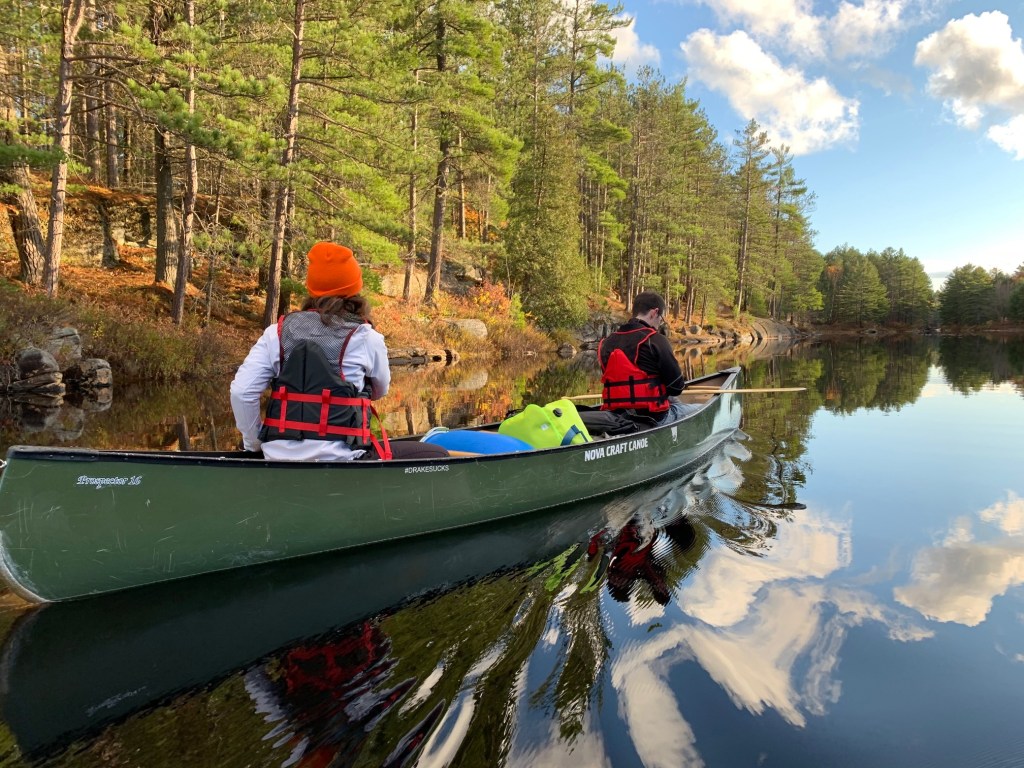
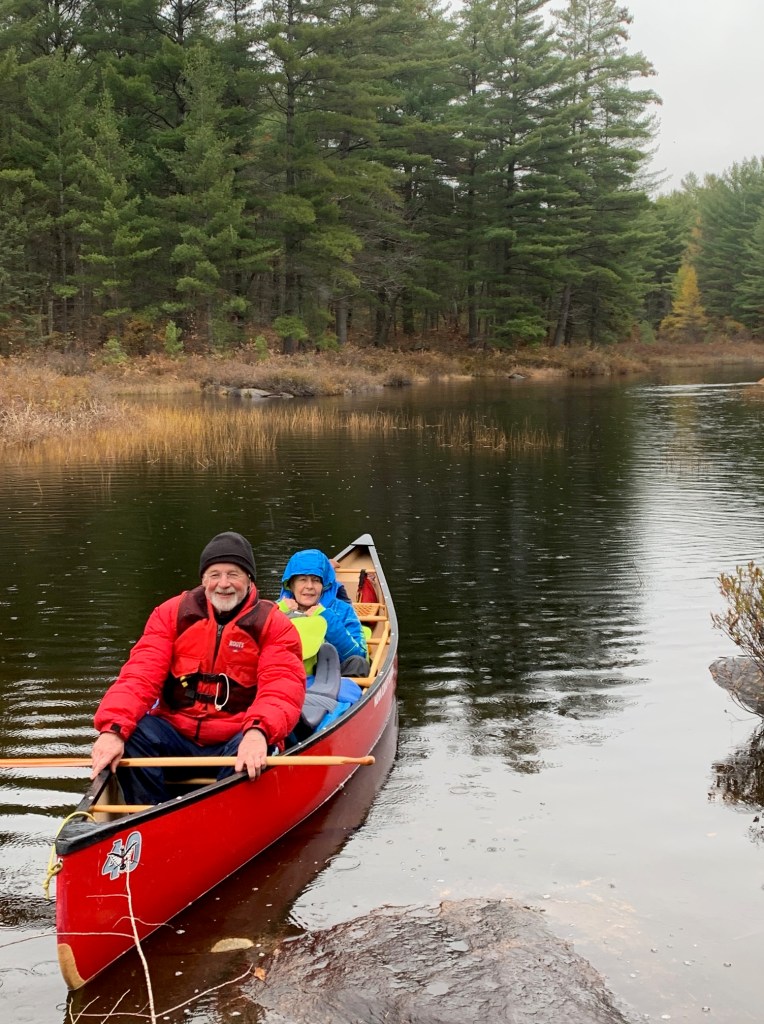
This would be a family trip – my mom, dad and I would leave Mississauga on Friday morning, and meet my sister and her boyfriend (travelling in from Gatineau) at the Herb Lake put-in, where we’d set off on the six-kilometre paddle to Gun Lake in mid-afternoon. Here, we’d camp for two days. I’m not sure how I convinced my mom to come along, but incredibly, this would be her first backcountry canoe trip and she would be doing it in mid-October with cold rains in the forecast.
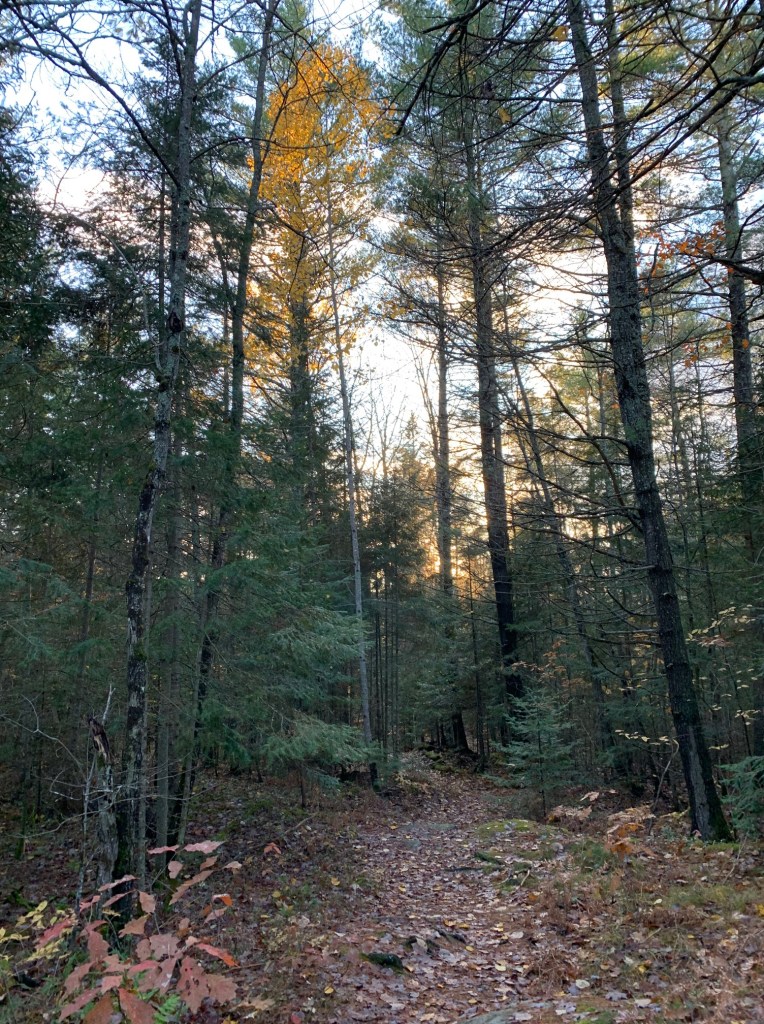
A picturesque drive on a windy day with sporadic showers, brought us down Kawagama Lake Road to the access point at Herb Lake. From here, looking out over the lake, we could see that the fall colours were past peak – the sugar maples had already mostly dropped and a dull rusty canopy interspersed by dark green conifers remained along the shorelines.
Looking out over the cold, windy lake from the interior of my car I’m certain my mom regretted her decision to join us, but my dad was there to provide levity; he poured us each a cup of his favourite camp drink – Southern Comfort – as we unloaded the car.
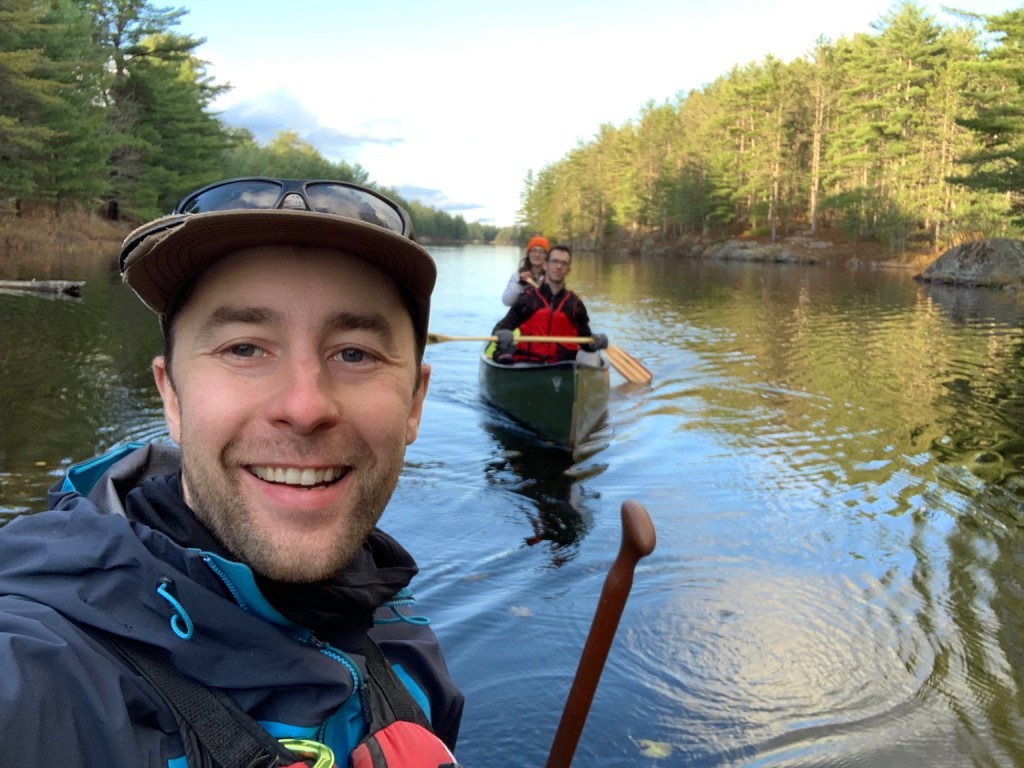
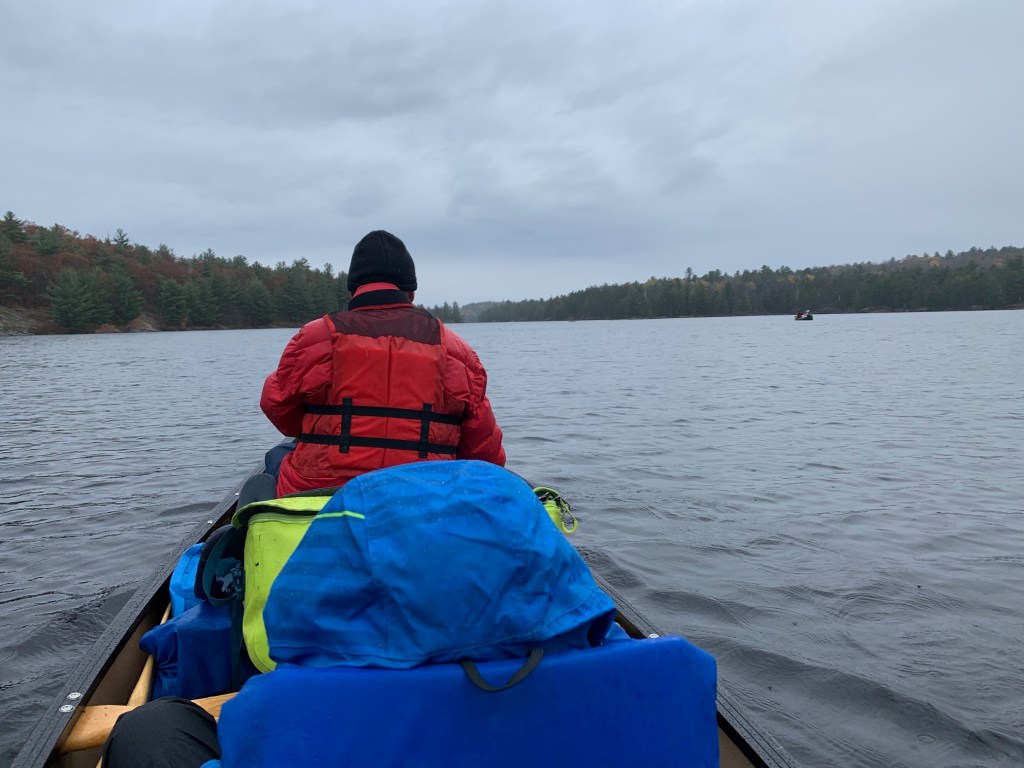
Before long, my sister and her boyfriend arrived at the put-in and we found ourselves on the water. By now the wind and rain had died down, however, a late start meant that we’d have to make haste to arrive at camp before nightfall.
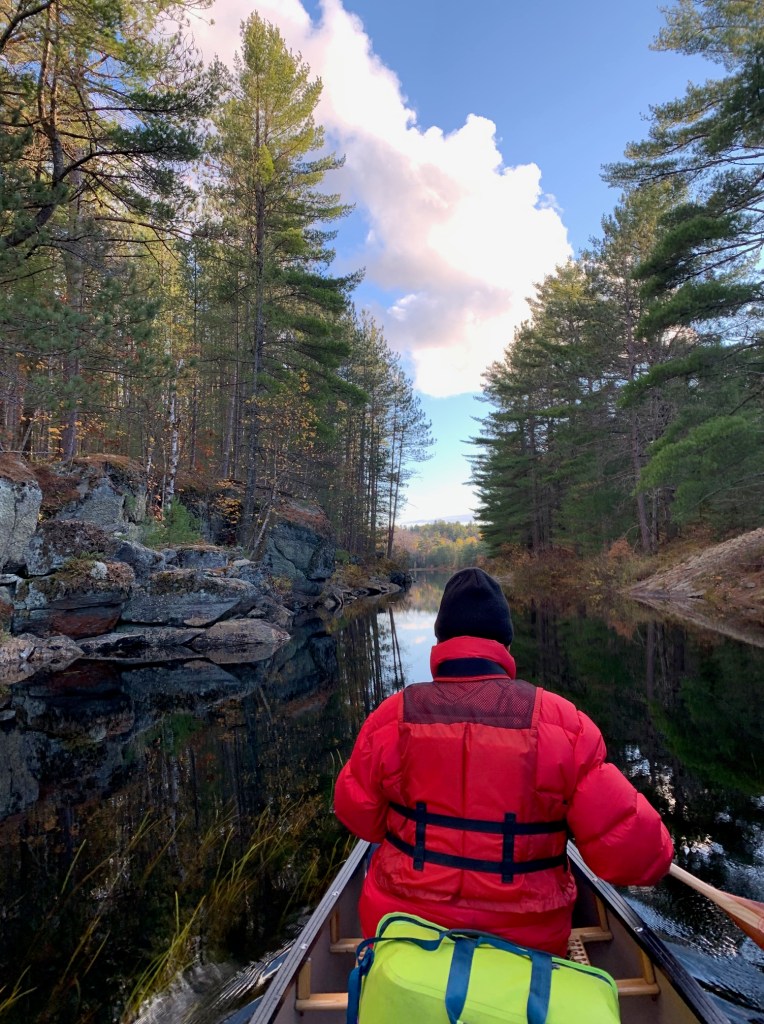
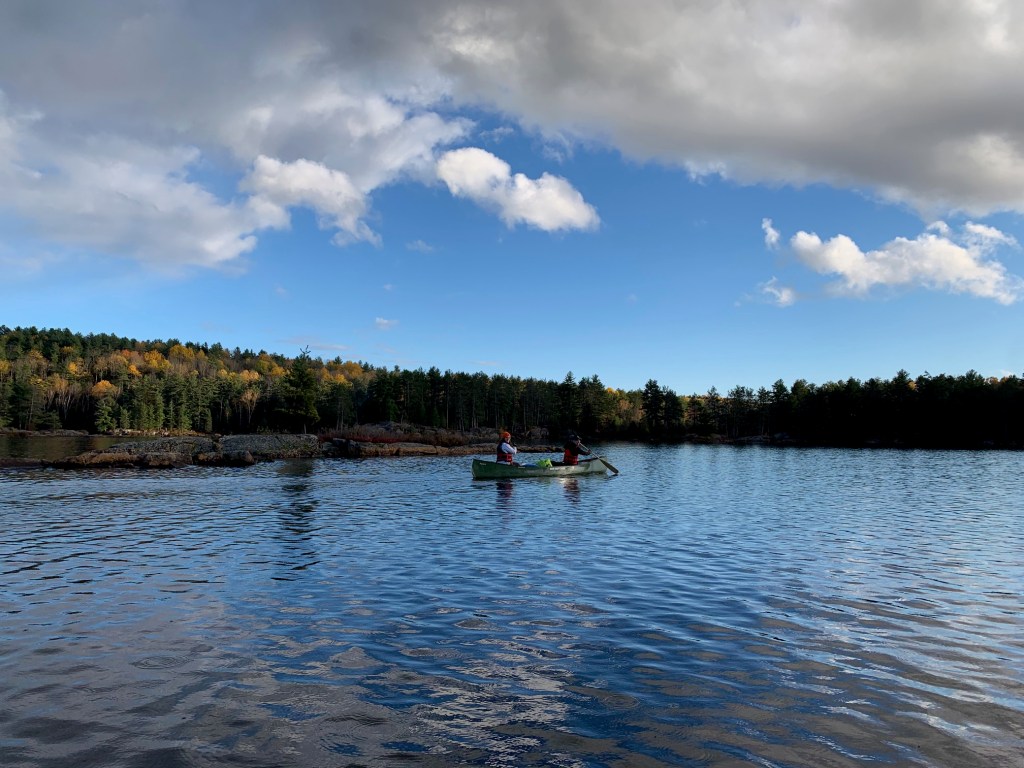
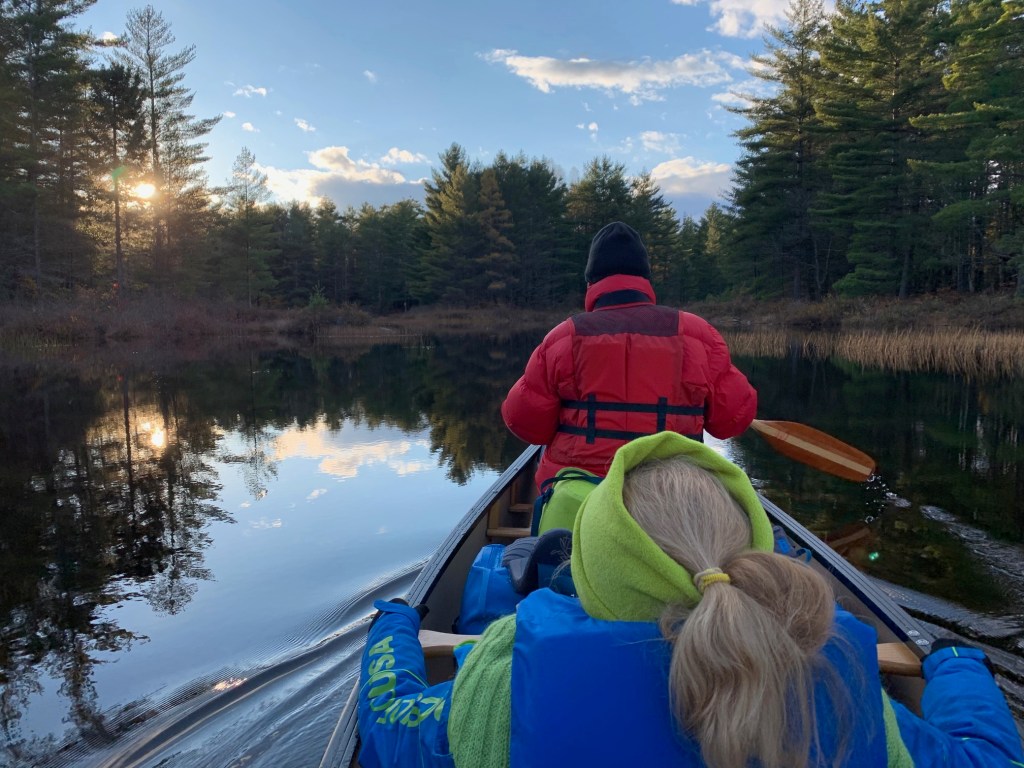
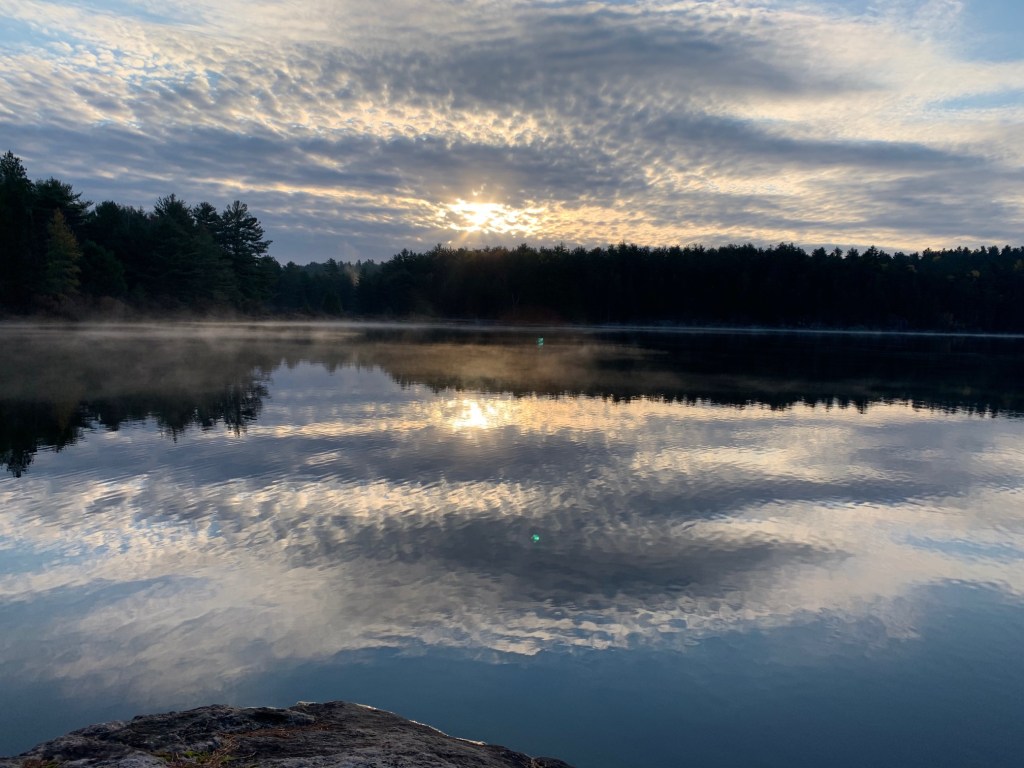
Herb Lake is a long, narrow four kilometre stretch of water that opens and constricts in a few places along its length before draining into a creek system as it flows toward Gun Lake. As we entered the creek section, I noted from the position of the low hanging sun that we had less than an hour of sun light.
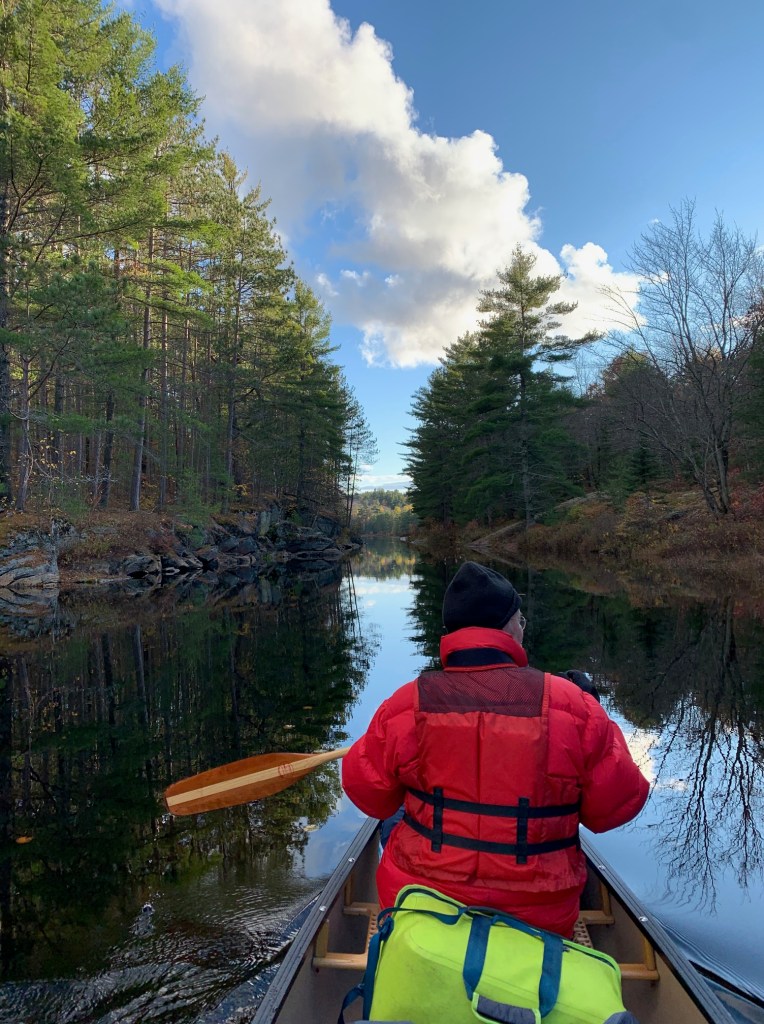
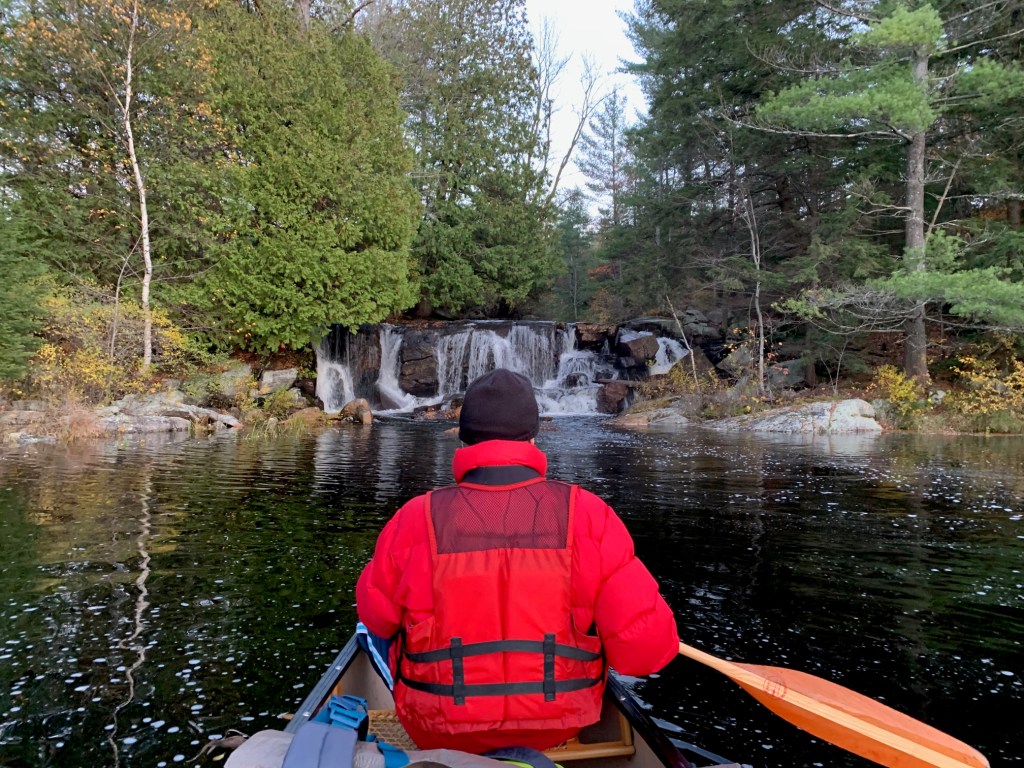
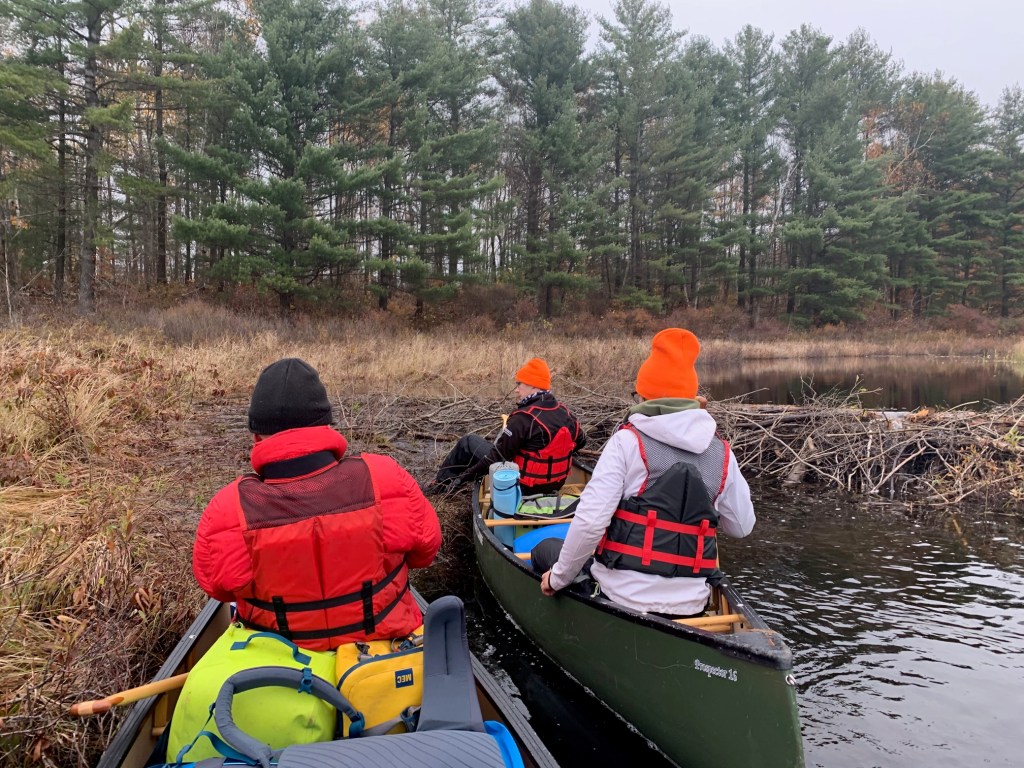
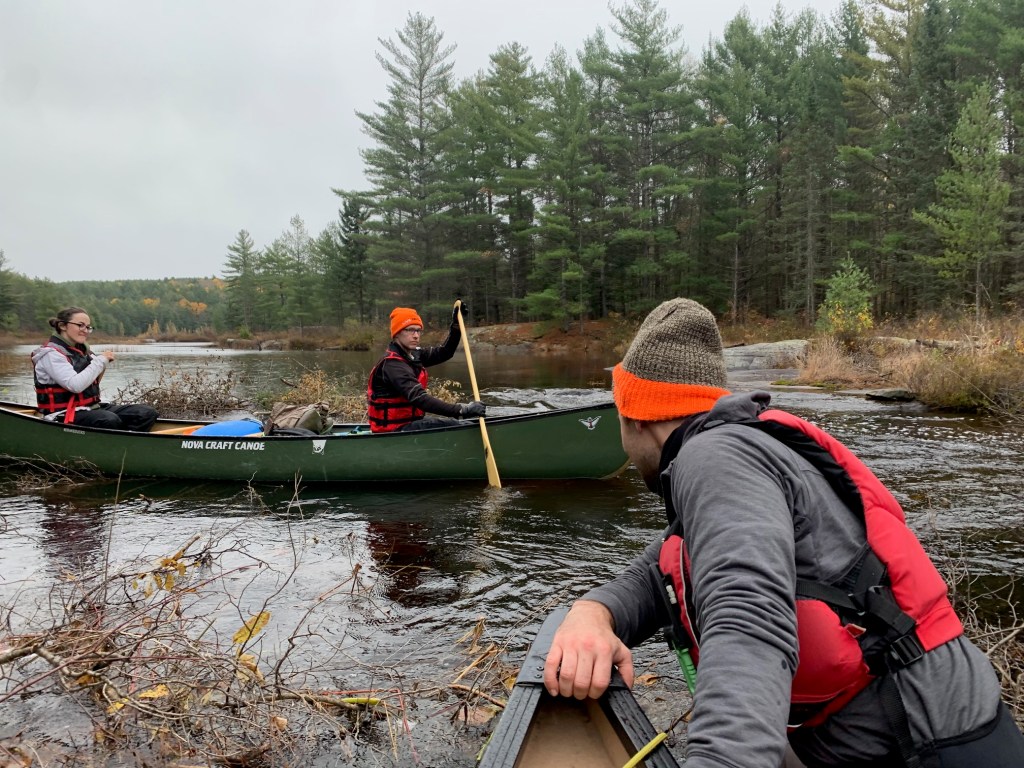
At the top of the creek, we burst over the top of a beaver dam without getting out of our canoes. The creek soon brought us to a 170m portage trail around a rapids and another 60m trail shortly thereafter.
We were now at a place called Brandy Falls – a scenic 10 or 12 foot waterfall that signals the end of the creek system. From Brandy Falls we could see our campsite approximately a half kilometre to the west, but to get out onto Gun Lake proper we still needed to navigate a boggy system of large bull rushes and haul our boats over a sizeable beaver dam (much to my mom’s discontent).
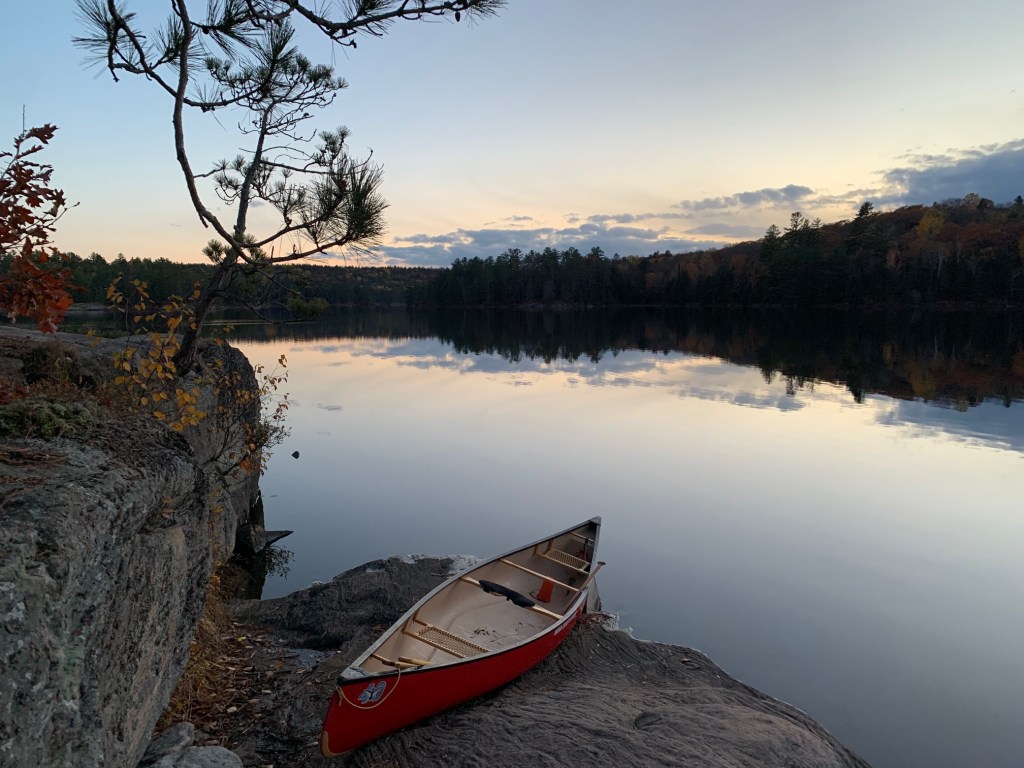
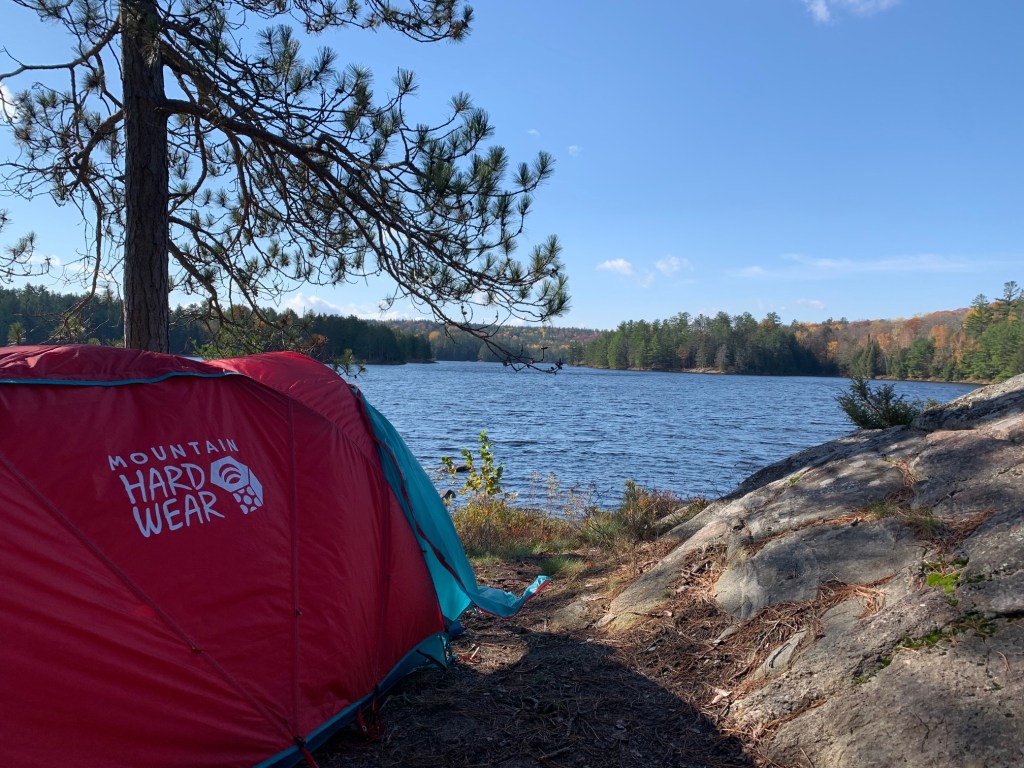
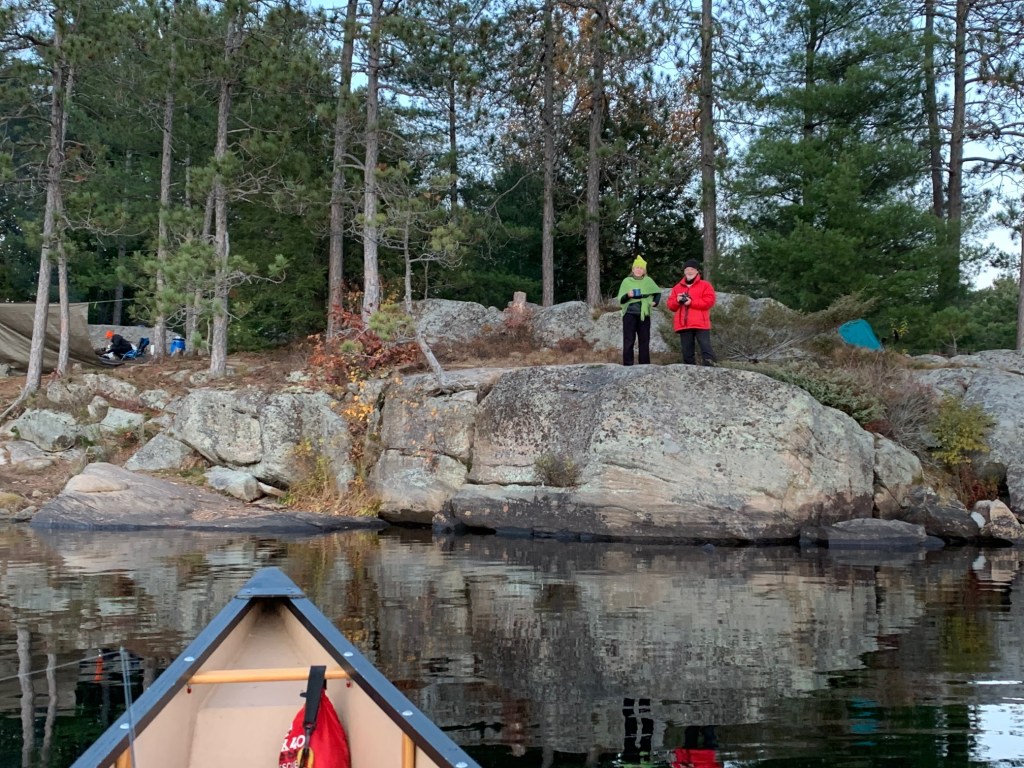
As we pulled into the site, the light of day was almost completely gone and we were forced to rely on our headlamps to assist in setting up camp. We felt fortunate, however, as we recognized that the site was of good quality, with a good vantage of the lake and plenty of open space. A nice bonus was the realization that the rain had stayed away. A warm fire and dinner were on the agenda before we called it an evening.
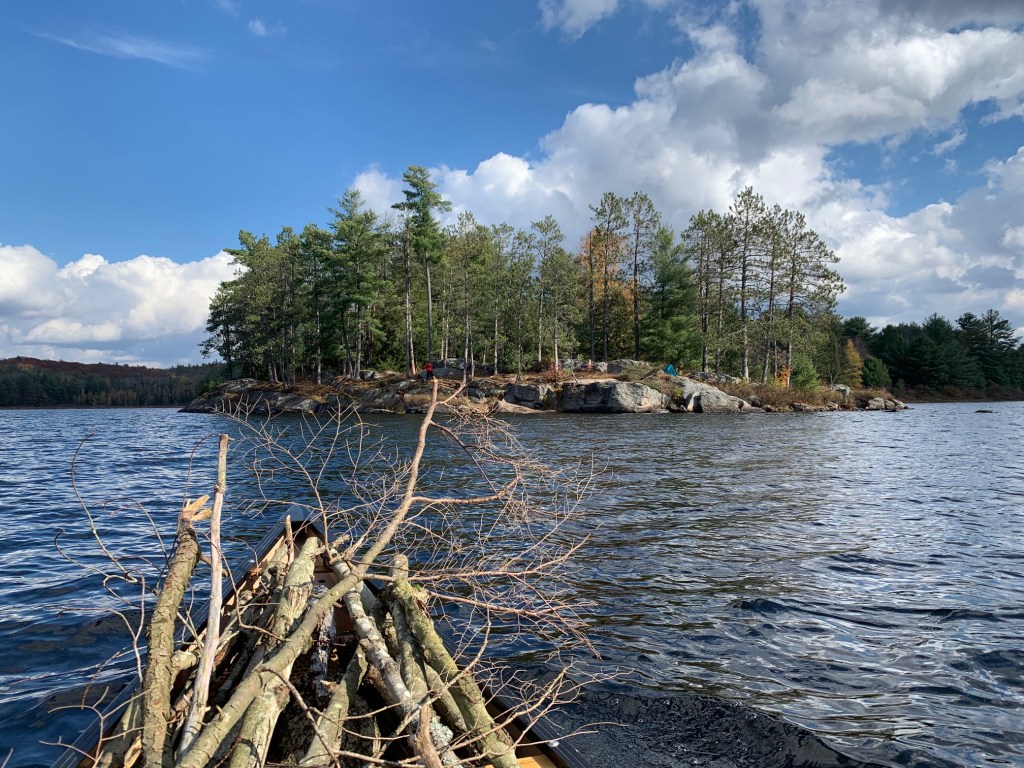
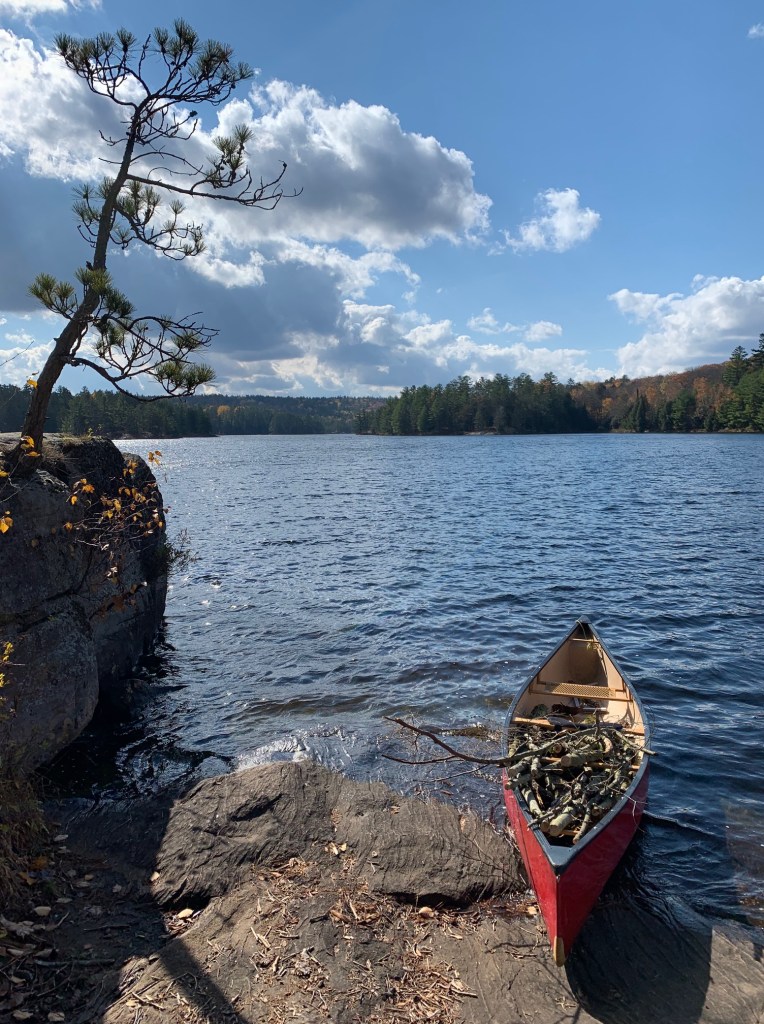
Additional travel was not in our plans for our second day. We simply intended to wake up late and lounge at the site. After a great meal of pancakes, however, we realized that our island site had virtually no viable firewood remaining and so I decided to tour the west coast of the lake to remedy the problem. Luckily, after a few minutes of searching, I found and dispatched a dead tree which provided enough wood to fill my canoe.
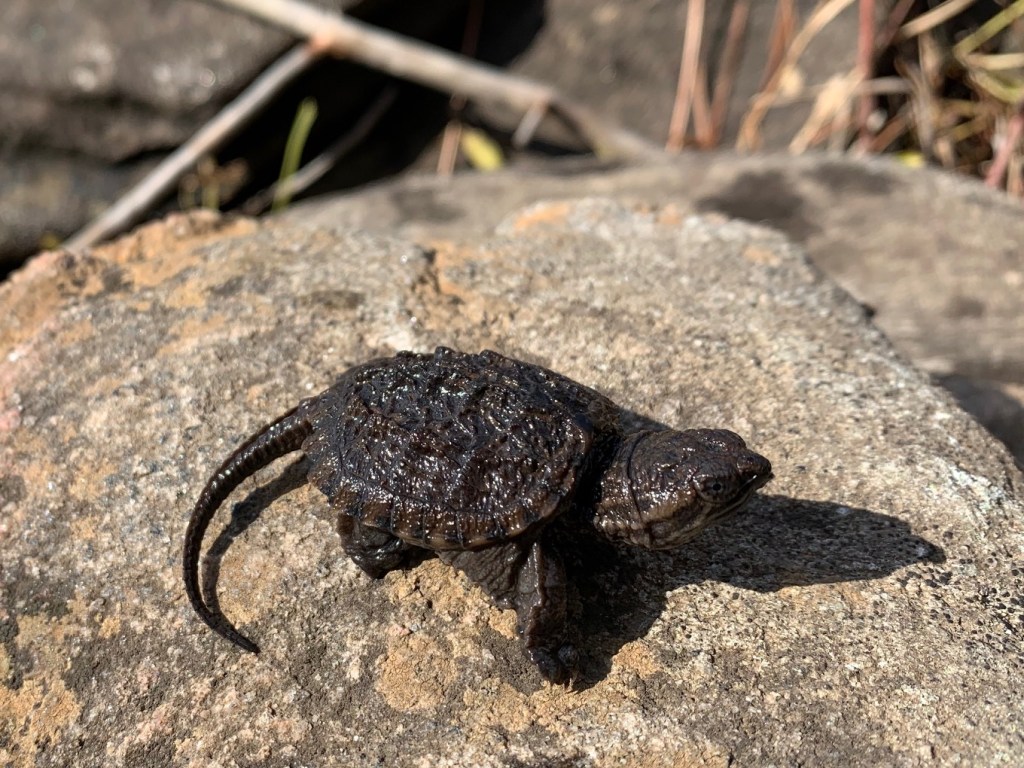
Not long after returning to the shore of our island and unloading our boat, I went down to the shore to gather water and, remarkably, found a baby snapping turtle swimming at the surface. The turtle was a dark earthy colour and no wider than a pocket watch. I called the others over and we collectively admired the beautiful, delicate little creature, as it bobbed around in the lapping waves.
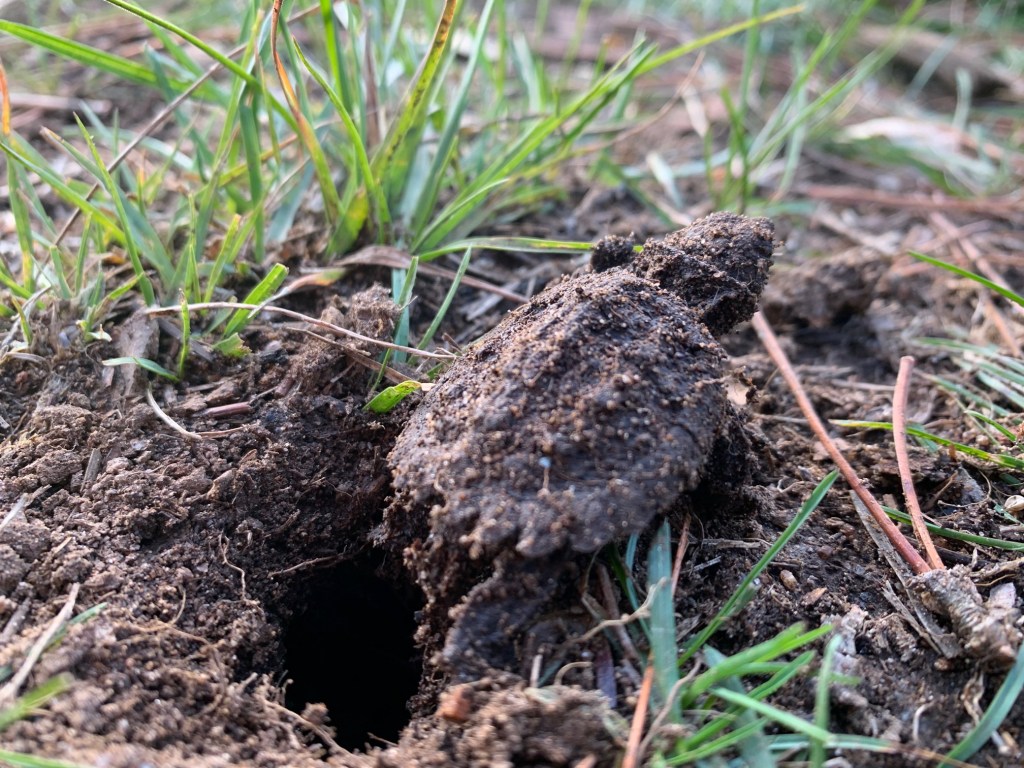
Soon my dad realized that other snapping turtle hatchlings were making their way down the slope of trail toward the water too. We followed their path up the hill and found a discreet hole in the soil that marked the location of the nest. Here we sat for a long time and watched turtle after turtle slowly, purposefully emerge from the nest, wipe their eyes clear of dirt and head toward the water to begin their previous lives. It was quite apparent to us that we were witnessing one of the great miracles of nature, and it was a moment, experienced with my family, that I will surely treasure for the rest of my days.

It is worth providing a few words here on the nature of these magnificent animals. In the springtime, female snapping turtles travel up to eight kilometres to find suitable sandy shorelines to dig their nests and lay their eggs. Each nest can contain 40-50 eggs, which incubate over the warm summer months before hatchlings emerge from the ground in the fall. These creatures, which measure only two or three in length at birth, can live well over 100 years, weigh more than 16 kilograms, and grow carapaces (shells) that exceed 40 centimetres in length.
Snapping turtles are considered species of special concern in Ontario due to their low reproduction rate and late age of maturity. The loss of adult turtles can significantly impact their future populations. If you, yourself, encounter species at risk in the wild, please report it to the the Ontario Natural Heritage Information Centre.
Upon witnessing the little turtles venture down into this big cold lake we wondered how they would fare, especially with winter fast approaching. Of course, snapping turtles, even at a young age, are well equipped to survive under the ice. They do this by hibernating – burying themselves in mud at the bottom of lakes and ponds and dropping their heart rate significantly.
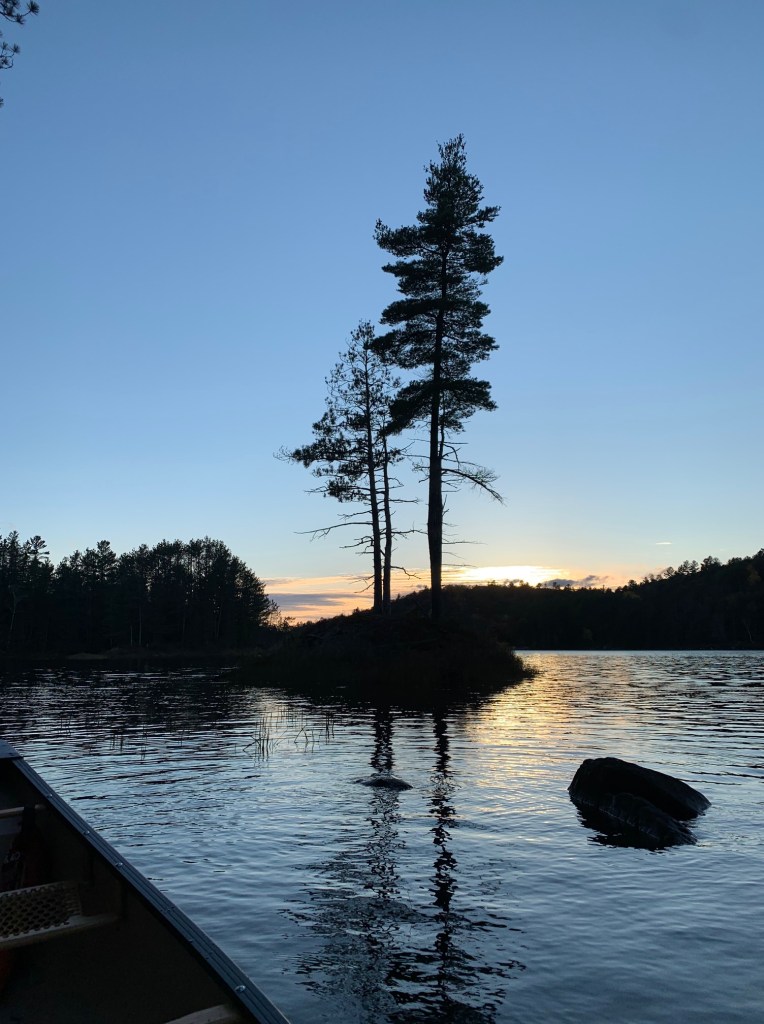
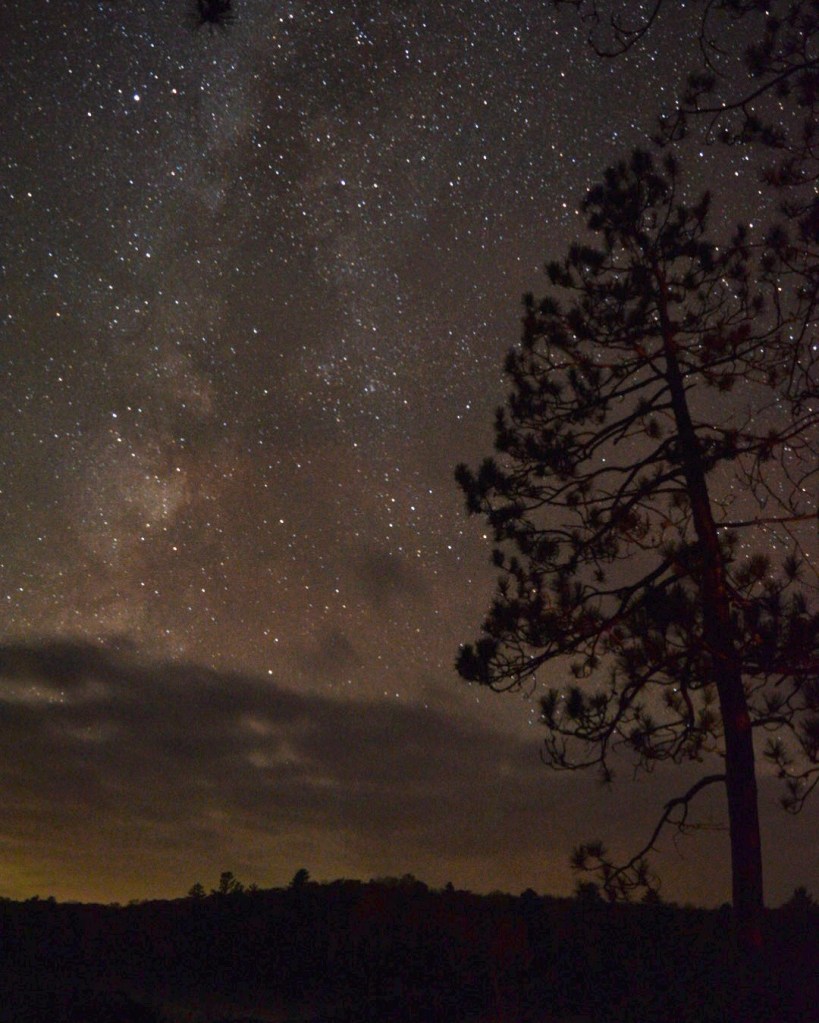
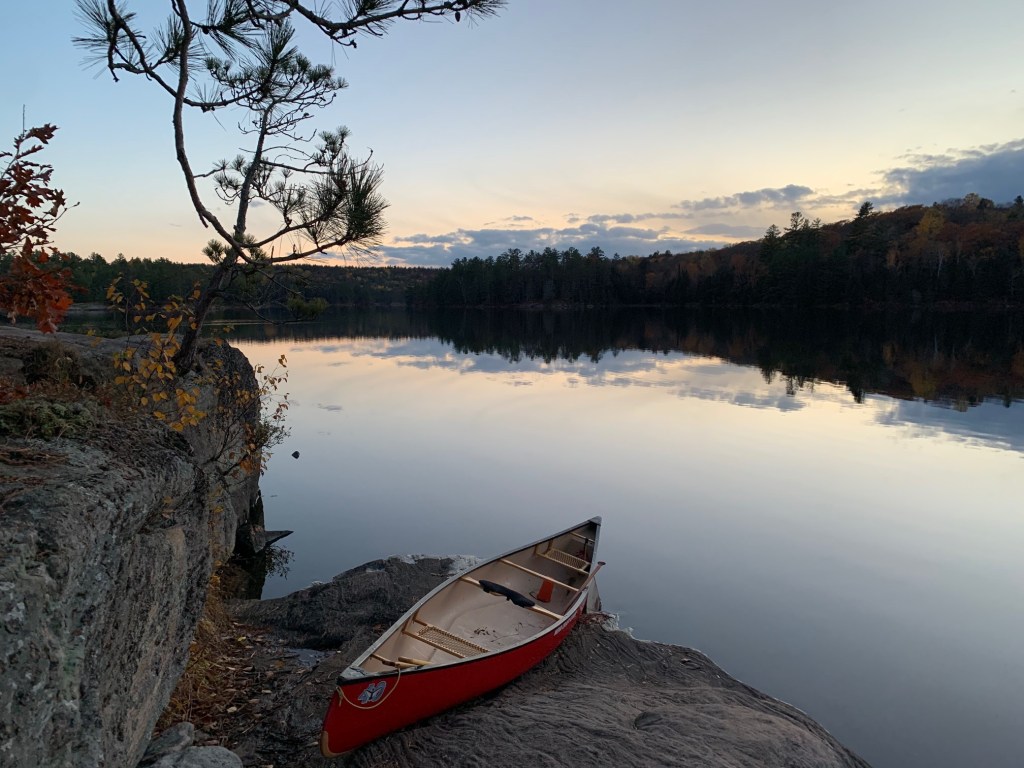
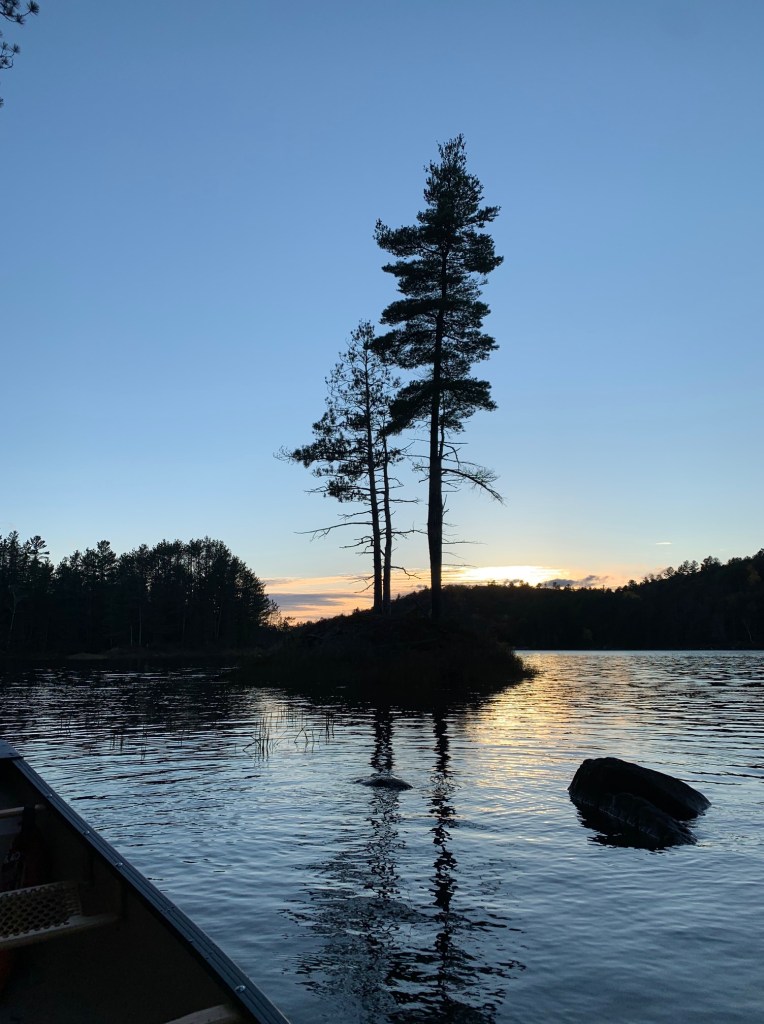
After some time, we decided to give the turtles a break spent much of the rest of the sunny day talking around the fire. Just before dusk, after the winds died, I went out on lake for a quick solo paddle to see if I could bag a fish or two. I spent about 30 or 40 minutes patrolling the coast for fish, without luck, but did get a chance to develop a better understanding of the lake and its surrounding forests. Perhaps best of all, I caught the sundown in the western sky from aboard my canoe, with a foreground silhouette of four small pines crowning a rocky island.
In returning to camp, I checked the weather forecast and confirmed that the following morning called for rain and winds. I provided an update to the others on the forecast and could see that my mother grew concerned with how we might escape the following day.
Night would do nothing to quell her nerves as strong winds kicked up after midnight and whistled through the pine trees above our tents. We could all hear the waves too, crashing against the shore as the rainstorm rolled in from the west.
In the morning, I waited for a break in the steady rain to pack our tents. We each grabbed a quick bite of food while we hurriedly packed up and left for the take out point.
One of the obstacles that worried my mom was the need to trudge through the muck upstream and over the beaver dam separating us from Brandy Falls. A canoe trip, in my view though, wouldn’t be complete without a bit of a mucky slog and so a couple of us happily hopped out and pushed the boat up the side of the dam, saving her the need to join us in the water.
With the drizzling rain gaining in force, we scampered over the two portages separating us from Herb Lake and paddled quickly to our take out.
Thus a great family canoe trip came to a close. It was a trip that had a bit of everything: sun, wind and rain, sizeable lakes, creek travel, a babbling waterfall, a beautiful sunset, good laughs, pancakes, and of course baby turtles.
We still talk about those little creatures from time to time and wonder how they’re doing out in Gun Lake. While many in a bale do not typically survive their first year, we look back fondly on these creatures with hope that most of them are managing well. Perhaps, some day I’ll take my young son out to Gun Lake and see if we can spot one of those same turtles once again.








 THE TERRA INCOGNITA