A detailed trip report and documentary on our 230km journey down the famous Bloodvein River from Artery Lake (Ontario) to the Bloodvein River Bridge (Manitoba) in the Summer of 2023 over almost two weeks.

A detailed trip report and documentary on our 230km journey down the famous Bloodvein River from Artery Lake (Ontario) to the Bloodvein River Bridge (Manitoba) in the Summer of 2023 over almost two weeks.
A video trip report documenting our 2020 trip through Mississagi River Provincial Park:
Just finished off a video trip report on our 2021 trip through Wabakimi Provincial Park:

Grey vapours loomed above us as we stood on the edge of Mattice Lake in Armstrong, Ontario. The cool, early morning air held a faint scent of smoke; a manifestation of record-breaking wildfires raging just to our west that would claim some 800,000 hectares of boreal forest by the end of summer, 2021. Under the hazy, overcast sky, a slight breeze tickled the surface of the lake. The water was cold and dark and the forest was dark too. The scene held a magnetic gloominess that stoked my sense of anticipation. We were about to begin an adventure through the heart of Wabakimi Provincial Park – a land of some 10,000 lakes and 2,000 kilometres of canoe routes…

In the summer of 1912, Tom Thomson – one of our country’s most beloved artists – ran the Mississagi from Biscotasing or “Bisco” to Lake Huron over two months. In a subsequent letter to a friend, Thomson remarked that the Mississagi was “the finest canoe trip in the world.” While we can only guess what precisely caused Thomson to write those words, it is clear that the Mississagi still undoubtedly retains the magic that he must have felt as he sat on its rocky shores and sketched the wild panoramas that surrounded him that summer.
As you embark, perhaps, on your own journey down the Mississagi, please remember that in exploring these immense and formidable landscapes, we not only draw ourselves closer to the earth, our home, but we also rekindle the glory of our country’s formative years when the land was younger, before the ceaseless march of the modern world. When we carve through the emerald cathedrals of the Mississagi, we reawaken the ghosts of a still wild kingdom, so that they may sing and chant and paddle once more.
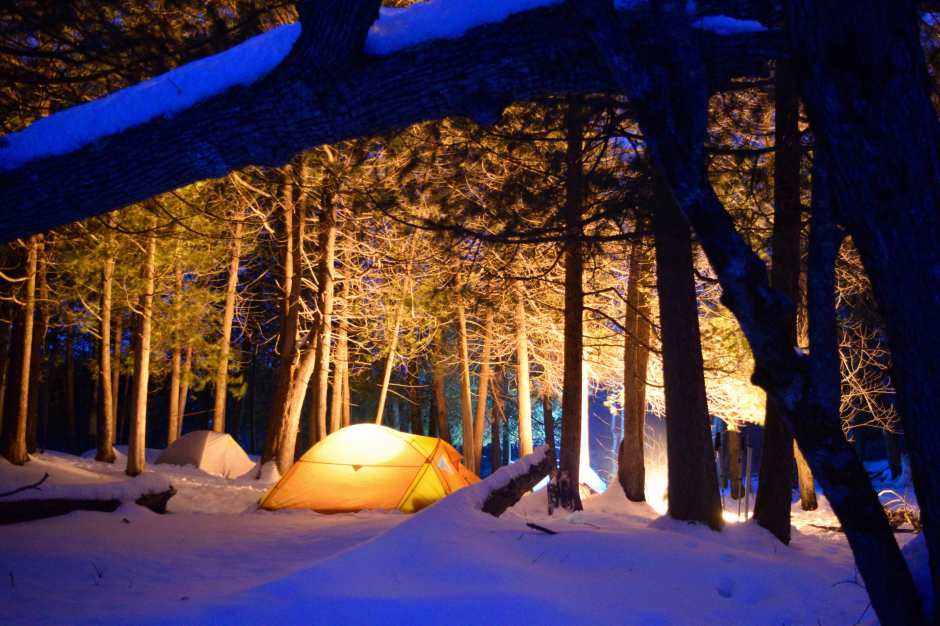
Being that the horizon, from our present vantage, was obscured by the ridges that rose above our site, I decided on a whim to dash back out to the east shore of the bay on my snowshoes to catch the setting sun. Though the colours of this sundown were not pervasive across the horizon, the clouds to the west were like floating ghosts of pink and orange, exuding a wonderful ever-changing spectrum of colour, which was diffused off the snow, illuminating even the darkest recesses of the forest.
Witnessing the sun set over a lonely, frozen, snow encrusted lake or river in the chill of winter has long been one of my favourite wilderness experiences. There is something endlessly calming and beguiling about our primary source of heat and light, and life, building up to a great crescendo – the pinnacle of its glory – before suddenly fading beyond the farthest trees and leaving behind a cold and silent world; one that is starkly different, but no less enchanting.
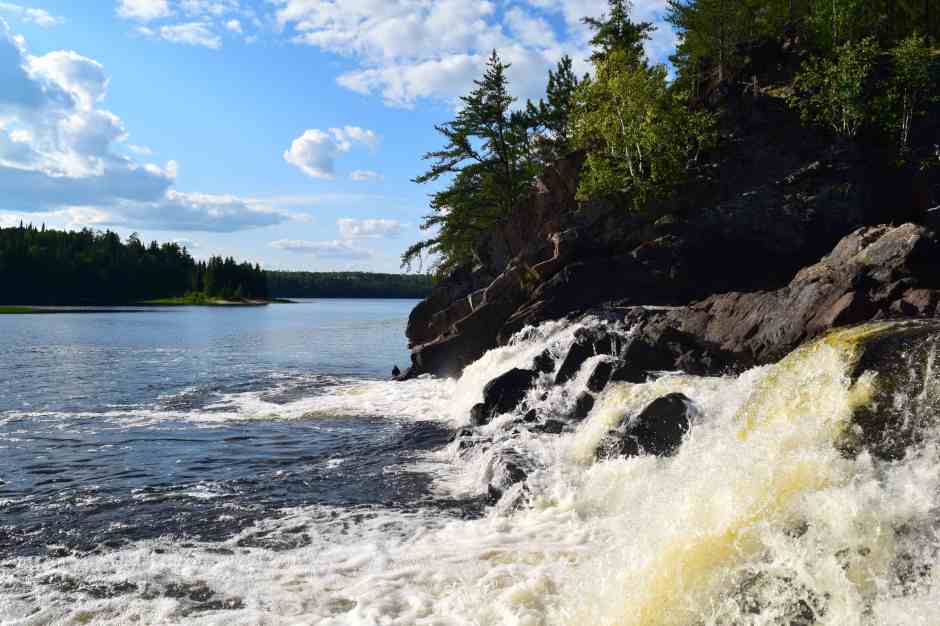
In the boreal highlands northeast of Superior, on the edge of Algoma, is a land of rugged adventure and romance. This country, where it has been spared from steel, is a lush, wilderness paradise that affords the type of quintessential setting that would be nostalgic and familiar to any Canadian: the hill-studded silhouette of the forested horizon, aglow in pink and gold with the last moments of the burning mid-summer sun; the air, sweet, with the fragrance of pine, and silent beyond the quiet murmur of a distant waterfall; two lonely canoes beached upside-down on the sandy shore, their slick hulls casting a reflection off the sky; three small tents nestled in the forest over a floor of pine needles, in their natural place amongst the spiring conifers; the ghostly smoke of a campfire hanging low and curling over the still air of the glassy lake; a dream-like world, which has no earthen match in tranquility or peace.

The magnificent, primeval ridges and valleys of Wabakimi were carved and scoured in the twilight of the last ice age, some 12,000 years ago. Black spruce, tamarack and jack pine, thin and stunted from long, harsh northern winters, cling to the shallow veneer of soil that scantly coats this portion of the Shield country. This harsh world still wholly belongs to the woodland caribou, the grey wolf and the bald eagle.
Signs of humanity are sparse; few tread here. But if you endeavour to pass through this land, look carefully under the shadowy canopies of those weathered and stunted tamaracks; under the beard lichen and Labrador tea; amongst the sphagnum moss, wood ferns and wild blueberries bushes; you will find trails of another time. Gaze over the placid waters, down the tumbling rivers, across the serpentine lakes, and envision the water trails of yesteryear. These canoe routes were established over centuries by the North of Superior Ojibwe – ancestors of the Whitesand, Mishkeegogamang, Saugeen, and Eabametoong First Nations. Today those canoe paths remain.

The cold subarctic gales, driving rains, unrelenting headwinds, the ruggedness of the lands, the turbulence of the waters – the Missinaibi and Moose Rivers in northern Ontario may well put you on a threshing floor and strip you down to your rawest emotions. Isolation, desolation, fear, and at times, utter despondency; nature here is unforgiving, uncompromising, and is capable of testing the upper limits of your endurance and fortitude. You may question why you do it.
But it is here that you will find colours you have never seen and Gods that you never knew existed. Swallows will flicker as they feed in the dimming dusk, the Aurora Borealis will dance through the northern sky as it has for aeons and you will edge closer to answering the great questions.
 THE TERRA INCOGNITA